Green eyes are one of the least common eye colors, and they are also one of the most misunderstood. They contain no green pigment at all. Their color is a small piece of physics, a little brown pigment and a yellow tint working together with light that scatters inside the iris.
What green eyes look like
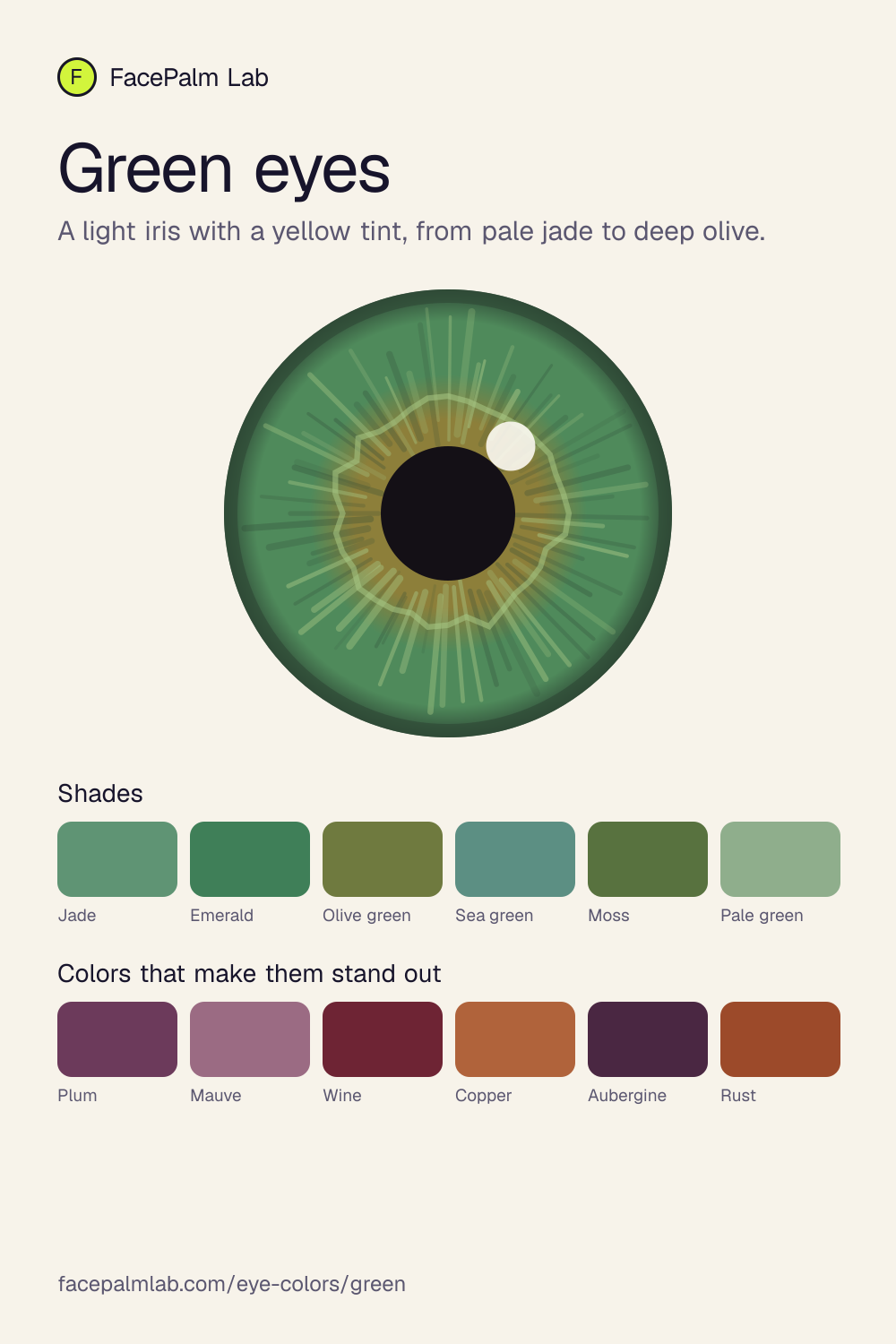
Green eyes range from pale jade and sea green to deep emerald and olive. Many have a thin gold or light brown ring right around the pupil, and some have small flecks of gold or brown in the green. The outer edge is often darker, a gray green or a dark limbal ring that frames the color.
Because green sits between blue and brown, the same eyes can look different from one photo to the next. In cool light they lean toward blue or gray. In warm light they lean toward olive and hazel.
How rare are green eyes
The American Academy of Ophthalmology puts green eyes at about 2 percent of people worldwide. In a 2014 poll of US adults for the academy, about 9 percent said their eyes are green, which makes green the least common of the four colors that poll counted. Self reported numbers are rough, because many green eyes get called hazel or blue. Our guide to the rarest eye colors puts green next to gray, amber and the rest.
What makes green eyes green
Every eye color comes from how much melanin sits in the front layer of the iris and how light scatters there.
- A little melanin. Green eyes have more brown pigment than blue eyes but far less than brown eyes.
- A yellow tint. A pale yellowish pigment, often called lipochrome, adds warmth to the front of the iris.
- Scattered blue light. The fine fibers of the iris scatter short blue wavelengths, the same effect that makes blue eyes blue.
Blue light plus a yellow tint reads as green. Change the balance a little and the eyes move toward blue eyes or toward hazel eyes. That narrow balance is a big part of why green is uncommon.
Eye color is shaped by many genes working together, not by one simple switch. Our guide to eye color genetics explains why two parents can have a child with green eyes even if neither of them does.
Green vs hazel eyes
Green and hazel eyes are confused all the time, and the line between them is fuzzy.
- Green eyes are green across most of the iris. A thin gold ring at the pupil is common and does not make them hazel.
- Hazel eyes have a wider brown or gold center that takes up a real share of the iris, and they look brown in dim light.
A simple test is to look at your eyes in a mirror by a window, then again under a warm lamp. Eyes that stay mostly green are green. Eyes that turn mostly brown under the lamp are hazel. Our eye color checker measures the inner and outer zones separately and shows the shade mix in words.
Green vs blue eyes
Some eyes sit right between blue and green, a shade often called blue green, teal or aqua. They have slightly more yellow tint than blue eyes and slightly less than green eyes. Our guide to blue green eyes covers this in between shade in detail.
Why green eyes seem to change color
Green eyes do not change pigment from day to day, but they respond strongly to their surroundings.
- Light. Daylight shows the truest green. Shade and overcast skies push it toward blue or gray, and warm lamps push it toward olive.
- Clothes. Colors near the face reflect onto the eye and change how the brain reads it. Purple and plum make green look brighter, and green clothing can make it look deeper.
- Pupil size. A large pupil hides more of the gold inner ring, so the eyes look more evenly green.
Many babies are born with lighter eyes that darken over the first year or two, so a baby with blue eyes can grow into green eyes. In adults, a new change in eye color that does not come and go with the light is worth showing to an eye doctor.
Makeup and clothes for green eyes
Colors across the color wheel from green make it look brighter. That means reds and purples, softened for everyday wear into plum, wine, mauve, berry, copper and rust. Warm browns and bronze also work well, because they echo the gold that many green eyes carry near the pupil.
For a palette that suits your skin and hair as well as your eyes, try our seasonal color analysis. Green eyes appear in every color season, so the best palette depends on your whole coloring.
Green eyes at a glance
| Trait | Green eyes |
|---|---|
| Pigment | Little melanin with a yellow tint |
| Common shades | Jade, emerald, olive, sea green |
| Near the pupil | Often a thin gold or light brown ring |
| Most often confused with | Hazel and blue |
| Looks greenest in | Daylight, next to plum or copper |