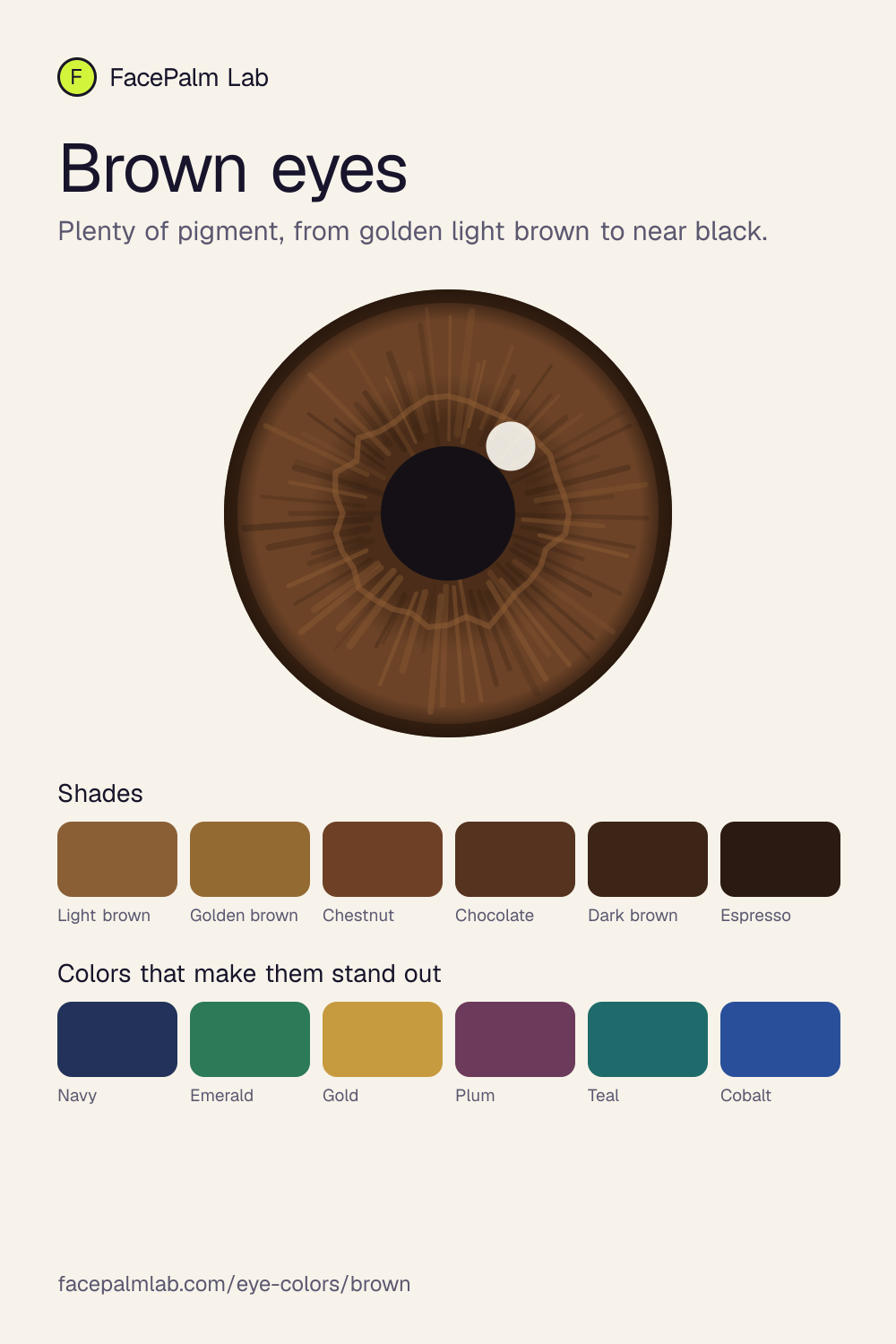
Brown is the eye color most of the world shares, and it is far more varied than its reputation. Brown eyes run from golden light brown that glows in sunlight to a deep espresso that looks black across a room. Many also hold flecks of amber, a darker outer ring or a lighter ring around the pupil.
What brown eyes look like
Brown eyes are brown across the whole iris, from the pupil to the edge. Within that, there is a lot of range.
- Light brown irises show honey and golden tones, especially in sun.
- Medium brown irises, such as chestnut and chocolate, look evenly brown in most light.
- Dark brown irises look deep and rich, and can read as black indoors.
Many brown eyes have a lighter ring of gold near the pupil or a darker limbal ring at the edge, and some have small amber flecks.
Light brown eyes
Light brown eyes hold a little less melanin than darker brown eyes, so more light reaches the fibers of the iris and they show their structure. In daylight they look golden, honey or caramel, and some people describe them as amber eyes. The difference is that light brown still looks brown first, while amber looks golden first.
Light brown eyes are also often confused with hazel eyes. If a light brown iris shows any green toward the edge in daylight, it is usually called hazel.
Dark brown eyes
Dark brown eyes hold the most melanin of any eye color. Melanin absorbs light, so very dark brown eyes reflect little of it and can look black indoors, in photos and from a distance. In bright sunlight the warm brown usually shows. There are no truly black irises, so eyes described as black are dark brown.
Our eye color checker separates dark brown, brown and light brown by how much light the iris reflects once the photo is balanced against the whites of your eyes.
How common are brown eyes
Brown is the most common eye color in the world. The American Academy of Ophthalmology says more than half of all people have brown eyes, and many estimates put the share near 80 percent worldwide. In a 2014 poll of US adults for the academy, about 45 percent said their eyes are brown, more than any other color. Our guide to the rarest eye colors compares brown with every other shade.
Why brown eyes are brown
The color of every eye depends on the front layer of the iris, the stroma.
- Plenty of melanin. Brown eyes have a lot of melanin, the same brown pigment found in skin and hair, in the stroma.
- Light is absorbed. That pigment absorbs most of the light that enters, so little is scattered back out as blue.
- The color is pigment. Unlike blue, green and gray eyes, brown eyes owe their color mainly to pigment rather than scattered light, so they change less with lighting.
Eye color is shaped by many genes, and brown eyed parents can have children with lighter eyes. Our guide to eye color genetics explains how.
Do brown eyes change color
Brown eyes change less than lighter eyes, because their color comes from pigment rather than scattered light. They still look darker indoors and lighter in sun, and lighter brown eyes can look golden next to warm colors. Babies with brown eyes at birth usually keep them.
In adults, a new change in eye color that does not come and go with the light is worth showing to an eye doctor.
Makeup and clothes for brown eyes
Brown eyes work with almost every color, so you can choose based on the look you want.
- To look rich and deep. Navy, teal, emerald and cobalt make brown eyes look darker and glossier.
- To bring out gold flecks. Gold, bronze and copper shadows echo the lighter tones.
- For contrast. Plum and purple shadows give brown eyes a warm glow.
For a palette that also suits your skin and hair, try our seasonal color analysis. Brown eyes appear in every color season.
Brown eyes at a glance
| Trait | Brown eyes |
|---|---|
| Pigment | Plenty of melanin in the front layer |
| Common shades | Light brown, golden brown, chestnut, chocolate, dark brown |
| Most often confused with | Hazel and amber |
| Changes with light | Less than lighter eyes |
| How common | Most people worldwide, about 45 percent in the US |